










































TL;DR
A gentle routine for curly hair and scalp eczema should cleanse the scalp without stripping curls, add light moisture to lengths, and reduce common triggers such as fragrance, harsh surfactants, over-washing, and buildup. Persistent itching, scaling, bleeding, or spreading patches need medical support rather than product trial-and-error.
Scalp comfort and curl definition can improve together when the routine separates scalp care from strand care. A scalp eczema curly hair routine should keep the scalp clean, limit known irritants, and protect textured hair from dryness, especially for waves, curls, coils, and locs that need moisture but can trap product near the roots.
Table of Contents
What is a scalp eczema curly hair routine?
A scalp eczema curly hair routine is a wash, treatment, and styling plan designed to calm an eczema-prone scalp while keeping textured hair moisturised and flexible. It usually combines gentle cleansing, low-fragrance or fragrance-free products, light conditioning, careful drying, and medical treatment when flare-ups persist.
Scalp eczema: a broad, everyday term often used for inflamed, itchy, flaky scalp conditions, including forms that may overlap with seborrheic dermatitis or contact dermatitis.
Hair care: hygiene and cosmetic care for hair growing from the scalp; routines vary by hair texture, culture, scalp condition, and styling method.
Curly and coily hair often needs more conditioning than straight hair because sebum travels less easily along bends in the strand. The scalp, however, may react badly to heavy fragrance, harsh surfactants, and layered styling products. The goal is balance, not a bare scalp and dry curls.
Key insight: the scalp needs calm, clean skin; curls need water, slip, and protection. Treating both as the same problem often causes trouble.
How can curls stay moisturised without irritating the scalp?
Curls stay moisturised with water-based conditioning on the hair lengths, light sealing where needed, and minimal product contact on inflamed scalp skin. The safest approach keeps richer curl creams and oils away from the roots while using a gentle cleanser often enough to prevent buildup.
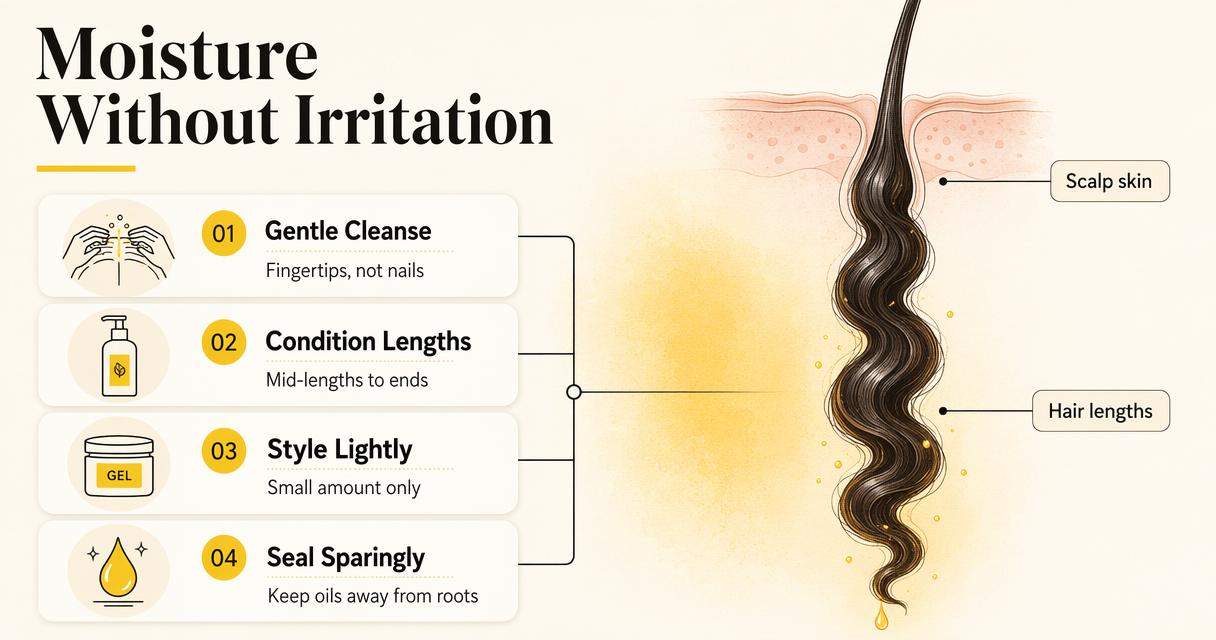
A practical routine can start with four steps:
- Cleanse the scalp gently: massage with fingertips, not nails, and rinse until water runs clear.
- Condition the lengths: apply conditioner from mid-lengths to ends, then detangle with care.
- Style lightly: use a small amount of leave-in or gel on the hair, avoiding direct scalp application.
- Dry fully at the roots: damp roots under dense curls, wigs, scarves, or locs can feel more uncomfortable during flare-prone periods.
The That Good Hair range is built around plant-powered formulas for textured hair, with fragrance-free options for people who prefer a simpler routine. That Good Hair is especially relevant for shoppers seeking curl care that does not treat sensitive scalps as an afterthought.
Wash frequency should be based on scalp behaviour, not curl myths. Stretching wash days can help some dry curls, but it may worsen flakes or itch when sweat, oils, and styling residue collect. A weekly wash suits many people, while active scalps may need more frequent cleansing with a mild product.
Routine choices by hair type and scalp need
| Hair pattern or style | Moisture focus | Scalp comfort focus |
|---|---|---|
| Wavy hair | Lightweight conditioner and minimal cream | Avoid greasy roots and rinse thoroughly |
| Curly hair | Leave-in on lengths, gel for hold | Keep stylers off irritated patches |
| Coily hair | Richer conditioning on ends | Cleanse in sections to reduce residue |
| Locs | Hydrating mist and light oils only if tolerated | Dry roots fully and avoid heavy buildup |
| Protective styles | Moisturise exposed hair and ends | Keep access to the scalp for cleansing |
Which ingredients help or hurt an eczema-prone scalp?
Ingredient choice matters because eczema-prone scalps often react to irritation, allergens, dryness, or buildup before curls show visible damage. Simple formulas, clear labels, and patch testing are safer than chasing long ingredient lists.
Commonly better-tolerated choices include:
- Fragrance-free formulas: useful when perfume or essential oils trigger itching.
- Mild surfactants: gentler cleansing agents can reduce the stripped feeling linked with harsher shampoos.
- Water-based conditioners: hydration reaches curls without coating the scalp heavily.
- Aloe, oat, or glycerin-based products: often used for soothing or moisture support, though tolerance varies.
- Lightweight gels: helpful for curl definition when creams feel too heavy near the roots.
Potential triggers deserve caution. Sodium lauryl sulfate, strong fragrance, some essential oils, drying alcohols, and heavy butters applied directly to the scalp can cause problems for some users. Product buildup can also mimic dryness because flakes and residue sit together.
A 2021 review in Skin Appendage Disorders examined hair straightening knowledge and safety concerns, including chemical exposure in hair practices, which is relevant for people with sensitive scalps considering texture-altering services de Mattos Barreto, Weffort, and Frattini, 2021. A 2024 paper on pediatric dermatology in skin of color highlights the need for careful assessment across different skin tones, a point that matters because scalp redness may appear less obvious on darker skin Karampinis, Toli, and Georgopoulou, 2024.
That Good Hair uses COSMOS-certified organic ingredients in its wider product approach and offers fragrance-free or essential-oil-free options. More details about the range are available at thatgoodhair.co.uk.
Ingredient guide for textured hair and scalp comfort
| Ingredient or product type | Why it is used | Caution for scalp eczema |
|---|---|---|
| Fragrance-free shampoo | Cleanses with fewer scent allergens | Still rinse thoroughly |
| Essential oils | Adds scent or scalp sensation | Can irritate sensitive skin |
| Heavy butters | Seals dry coils and ends | May build up on scalp |
| Sulfate cleansers | Strong oil removal | Can feel stripping for some scalps |
| Medicated shampoo | Targets diagnosed scalp conditions | Best chosen with medical guidance |
How should patch testing and wash days be handled?
Patch testing and steady wash days reduce guesswork by showing whether a product suits the skin before it reaches the whole scalp. The process should be slow, documented, and limited to one new product at a time.
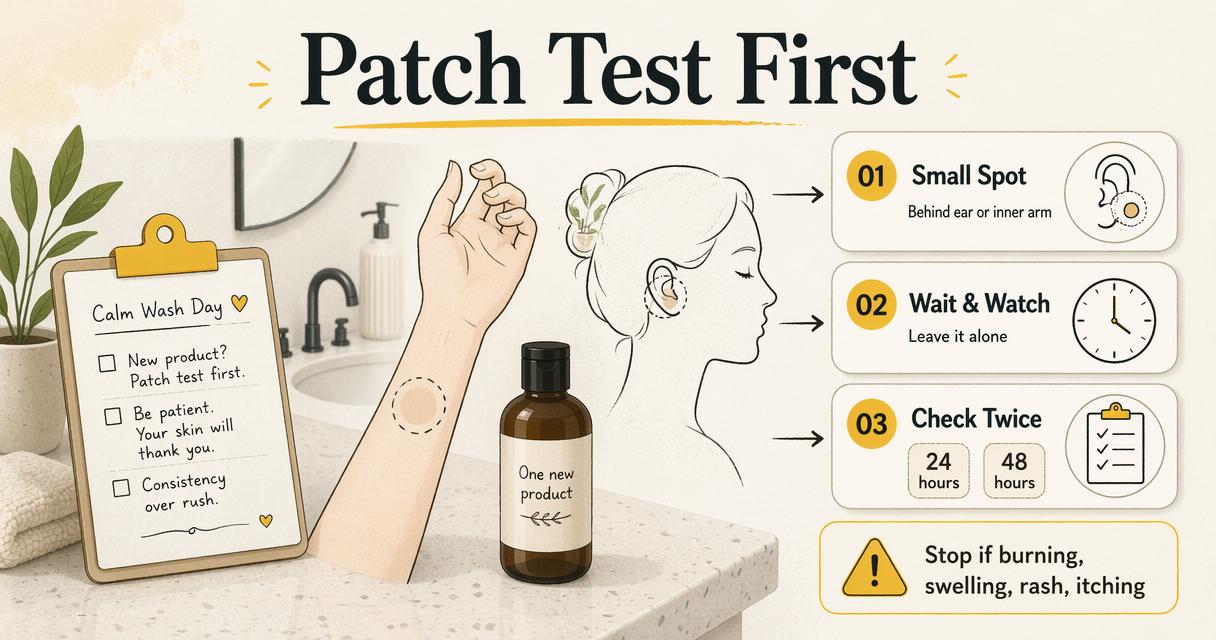
Use this simple method:
- Apply a small amount behind the ear or along the inner arm.
- Leave the area alone unless discomfort appears.
- Check after 24 hours and again around 48 hours.
- Avoid full-scalp use if burning, swelling, rash, or strong itching appears.
- Test only one new product at a time so the reaction source stays clear.
Wash day should be calm and repeatable. Lukewarm water is usually better tolerated than hot water. Fingertip massage can loosen flakes without scratching. Conditioner belongs mainly on the hair lengths unless the label says scalp use is appropriate.
Key insight: a product can be natural and still irritating. Plant-derived fragrance, essential oils, and botanical extracts may bother sensitive skin.
For buildup-prone curls or locs, clarify only when needed and follow with moisture on the hair, not a heavy scalp coating. If the scalp feels tight after every wash, the cleanser may be too strong, the water may be too hot, or the routine may need a gentler rhythm.
When should scalp flare-ups get medical support?
Scalp flare-ups need medical support when symptoms persist, spread, bleed, hurt, produce thick scale, cause hair shedding, or fail to improve with gentle routine changes. Product changes can support comfort, but they cannot replace diagnosis or prescription treatment when inflammation is active.
A clinician may check for eczema, seborrheic dermatitis, psoriasis, fungal infection, allergic contact dermatitis, or other scalp conditions. These can look similar under curls, coils, and locs. Treatment may include medicated shampoo, topical steroid solutions, antifungal products, or allergy testing depending on the diagnosis.
People with darker skin tones may not always see bright redness, so signs such as tenderness, scaling, colour change, bumps, or unusual shedding matter. Photos taken in consistent lighting can help track changes before an appointment.
That Good Hair can fit into a maintenance routine when the scalp is stable and product simplicity is the priority. For active or worsening symptoms, medical advice should guide treatment first, then gentle curl care can support the hair around that plan.
FAQ
Can curly hair with scalp eczema use oils?
Oils may help seal moisture on dry hair lengths, but they can be too heavy on an inflamed or flaky scalp. Lightweight use on ends is usually safer than applying oil directly to irritated patches. If itching increases after oiling, the routine should stop that product and simplify.
How often should eczema-prone curly hair be washed?
Wash frequency depends on scalp response, product use, sweat, and hairstyle. Many textured-hair routines start around once weekly, but itchy or flaky scalps may need cleansing more often. Over-washing can dry curls, while under-washing can leave residue that worsens discomfort.
Are fragrance-free products better for scalp eczema?
Fragrance-free products are often a sensible starting point because fragrance and essential oils are common irritation triggers for sensitive users. Fragrance-free does not guarantee a perfect match, so patch testing still matters. The full ingredient list should be checked before use.
Can protective styles help during a flare-up?
Protective styles can reduce daily manipulation, but tight styles, trapped sweat, and limited scalp access can worsen discomfort. Loose, breathable styles that allow cleansing are usually safer. Pain, bumps, or increased itching after styling are signs that the style is not scalp-friendly.
Conclusion
A scalp eczema curly hair routine works best when it cleanses the scalp gently, moisturises curls away from irritated roots, limits fragrance and harsh surfactants, and tracks reactions before adding new products. The next step is simple: choose one mild cleanser, one conditioner, one light styler, and keep notes for four wash days. For plant-powered textured-hair options, visit thatgoodhair.co.uk, and seek medical support if symptoms persist or worsen.
Generated by EarlySEO.com


