Shampoo and Conditioner Sulphate Free: A 2026 Buyer Guide
TL;DR
Sulphate-free shampoo and conditioner suits curls, coils, locs, colour-treated hair, and sensitive scalps that need gentler cleansing. The best choice depends on hair pattern, scalp comfort, fragrance tolerance, and whether the formula balances moisture with enough cleansing power.
A shampoo and conditioner sulphate free routine can make wash day gentler without turning cleansing into guesswork. For textured hair and sensitive scalps, the aim is simple: clean the scalp, protect moisture, and avoid formulas that leave hair feeling stripped. That Good Hair focuses on plant-powered options for these needs.
Table of Contents
What is shampoo and conditioner sulphate free?
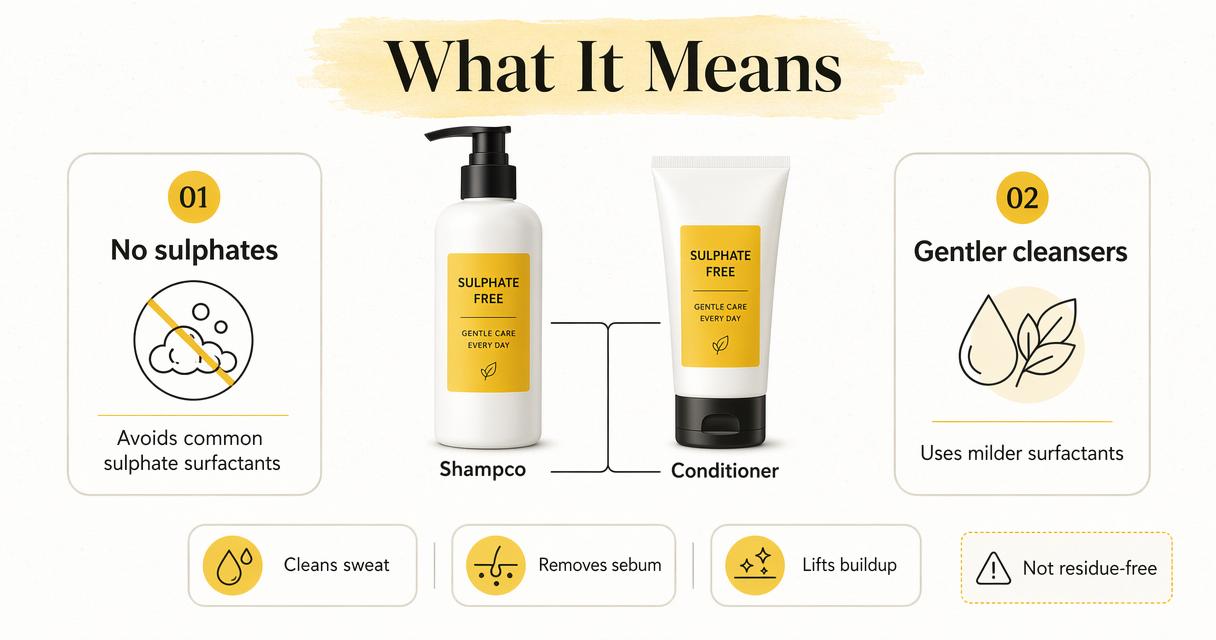
Shampoo and conditioner sulphate free means the cleansing and conditioning system avoids common sulphate surfactants, often used for strong foam and oil removal.
Shampoo: a hair care product, usually a viscous liquid or bar, formulated to clean hair and the scalp, based on the Wikipedia definition supplied in the research data.
Sulphate-free does not mean residue-free, foam-free, or automatically better for every scalp. It means the formula uses other cleansing agents, such as milder surfactants or plant-derived cleansers, to remove sweat, sebum, styling products, and environmental buildup.
Research on surfactants by Badmus, Amusa, and Oyehan in Environmental Science and Pollution Research reviewed environmental risks and toxicity of surfactants, which is one reason shoppers now look more closely at cleanser type, biodegradability, and rinse-off impact.
Key insight: sulphate-free hair care is mainly about cleansing style, not a guarantee that a product is gentle, natural, or suitable for every scalp.
Quick label terms to know
Sulphates: strong cleansing surfactants commonly associated with high foam.
Surfactants: ingredients that help water mix with oil and dirt so they rinse away.
Co-wash: a cleansing conditioner, often used between full shampoo days.
Fragrance-free: no added fragrance materials, useful for many sensitive-scalp shoppers.
Who benefits most from sulphate-free wash care?
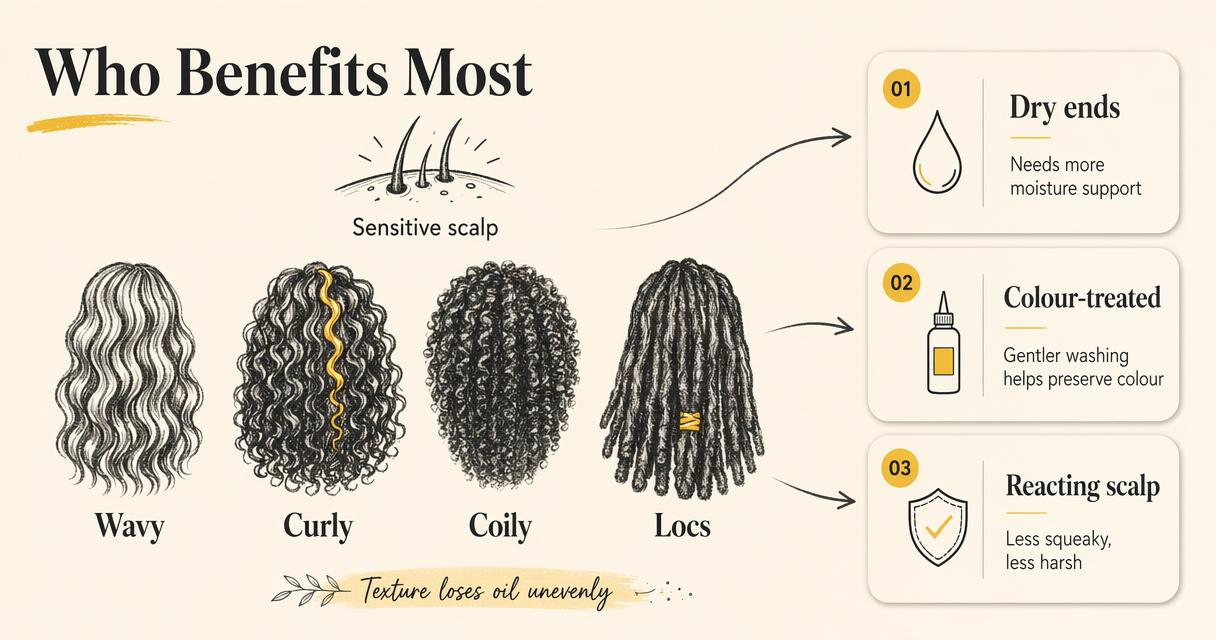
Sulphate-free wash care is most useful for textured hair, dry ends, colour-treated strands, locs, and scalps that react poorly to strong cleansing.
Wavy, curly, coily, and loc'd hair often need more moisture support because natural oils may not travel evenly from scalp to ends. A gentler cleanser can help reduce the dry, squeaky feeling that makes curls frizz, coils shrink tightly, or locs feel brittle.
Skin comfort also matters. A 2021 review by De Pessemier, Grine, and Debaere examined the gut-skin axis and microbial dysbiosis in skin conditions, reflecting the wider scientific interest in skin barrier balance and inflammatory skin concerns.
That Good Hair gives shoppers a practical way to compare gentle formulas for curls, coils, and locs, especially when scalp comfort and ingredient clarity matter. More product guidance can be found at thatgoodhair.co.uk.
Hair type selection guide
Hair type
Best sulphate-free focus
Useful product clue
Wavy hair
Light cleansing with soft moisture
Avoid heavy butters if waves flatten
Curly hair
Moisture retention and frizz control
Look for slip-rich conditioners
Coily hair
Creamy cleansing and deep conditioning
Choose richer oils and humectants
Locs
Scalp freshness with low residue
Pick clear-rinse formulas
Sensitive scalp
Low-irritant, simple formulas
Prefer fragrance-free or essential-oil-free options
Which ingredients should sensitive scalps avoid?
Sensitive scalps often do best with short ingredient lists that avoid common fragrance triggers, heavy buildup, and overly aggressive cleansing.
Fragrance is a frequent concern because "natural" scent still may include aromatic compounds from essential oils. Peppermint, tea tree, citrus, lavender, and eucalyptus oils can feel refreshing for some people, but sensitive-scalp shoppers often prefer formulas without added scent materials.
Heavy waxes and thick oils may also be a poor match for locs or flaky scalps when they leave residue. The issue is not that oils are bad; the problem is buildup that traps debris or makes cleansing harder.
Choose fragrance-free when eczema, psoriasis, dandruff, or seborrheic dermatitis is a concern.
Check for essential-oil-free wording if botanical scents have caused discomfort before.
Match richness to hair pattern, not just curl identity.
For locs, prioritise low-residue shampoos and lightweight conditioners.
Patch test new products before a full wash day.
A gentle routine should leave the scalp clean, not tight, and leave textured hair soft enough to style without heavy coating.
Conclusion
A shampoo and conditioner sulphate free routine works best when matched to hair pattern, scalp history, and ingredient tolerance. Shoppers seeking plant-powered, sensitive-scalp-friendly care can compare options with That Good Hair and visit thatgoodhair.co.uk for suitable next steps before the next wash day.
After buying from a stall in Westfield, I can’t live without this for my 2 girls curly hair. Keeps the hair so moisturised and soft all day, even the next. A staple and must buy!!
✨ Review: Hydrating Mist + Hair Oil Duo ✨
My son has been using the hydrating mist and hair oil from this company consistently in his hair routine, and the results honestly speak for themselves. His hair looks healthier, shinier, and has so much more volume now. On Eid especially, his hair looked amazing — soft, defined, and full without looking heavy.
The hair oil has become his favourite part of the routine. He massages it into his scalp twice a week and leaves it in for a couple of hours before washing. It really helps keep his scalp moisturised and makes his hair feel stronger and smoother afterwards.
The hydrating mist works perfectly alongside it because it adds lightweight moisture and shine without making the hair greasy. He usually sprays it before styling with mousse, and it helps define the hair while keeping frizz away all day. ✨
What we noticed after regular use:
Shinier, healthier-looking hair
Softer texture
Better volume and definition
Less dryness and frizz
Hair feels hydrated but lightweight
Overall, this combination has worked really well for his routine, especially for keeping his hair looking fresh and styled naturally. Definitely products we would keep using. ⭐
Best beard oil on the market, has the exact results I want from a beard oil and I need to use so little to get my desired results, couldn’t recommend enough
I have only just started using the products. It’s maybe just three weeks now but this leaves my hair feeling so clean without any white residue like some other cleansers. It’s a must have and because I feel so clean and all residue is removed. I no longer wash my locs I just use this now and it gives me the same effect pending when I decide to redo my locs at the salon.
Since using the hair butter and hydrating spray my daughter’s hair has been easier to style and there has been less tears. Before her hair was dry but after using the products her hair looks shiny and healthy. We love how they smell too. Would definitely recommend.
i really like the hair mist so far, i don’t need to wet my hair anymore to refresh the waves i just use the spray and it brings it back to life that little bit more!! when i finish i’ll bring it back to refill!! xx
It absorbs beautifully without sitting greasy on top, which is rare. My hair drinks it up and just looks expensive afterwards. The frizz? Calm. The dryness? Gone. The ends? Sealed and behaving.
I RARELY write reviews so trust me when I say this product has my heart! I believe it's my fourth time purchasing it and honestly my hair absorbs and loves it. I find my hair to be frizz free and I barely get any breakage, I put that down to how moisturising it is. I also use it for my kids and their hair loves it too! I love how gentle the ingredients, it gives me a peace of mind
I’ve been using this hydrating hair mist for a short while now, and I’m genuinely impressed with the results. My scalp feels well-hydrated and comfortable, without any dryness or irritation. My hair feels noticeably softer, healthier, and more manageable, with a natural shine that doesn’t feel greasy or heavy.
What I really appreciate is how lightweight the mist is—it absorbs easily and refreshes my hair without weighing it down. It’s perfect for daily use, especially when my hair needs a quick boost of moisture. Overall, this product has helped improve the look and feel of my hair, leaving it nourished, refreshed, and well cared for. I would definitely recommend it to anyone looking to maintain hydrated, soft, and healthy hair.
I was recommended this by someone who works here for my 4 month old baby. I’d beg to differ.. essential oils and tea tree are definitely not recommended for a baby so young. I tried it on myself it’s ok but definitely won’t be buying from here again. I wanted to like it but it’s not for me
I’m from the US and was very hesitant about this product. So happy to see that this product gave me the look I wanted! Happy customer…….definitely will purchase again.
I was approached in Westfield Shopping centre as I have curly hair and was told the product would be perfect for my type of hair. I have been looking for something that would be light enough not to weigh my hair down but give it the moisture it needs. I was super excited to use the mist but unfortunately it just dried my hair out. It was very light on my hair but didn’t enhance the curl pattern any more than what it was. I am very disappointed with the product especially for the price. I have to use it with my original hair product for it not to dry my hair out. I would not purchase again,
Sorry 😕 I wanted to love it but it’s not for me!
Great with hydration. Great with making my hair shine. Smells amazing. And I got loads of compliments on how healthy my hair looks deffo will buy again.
Love this mist. It detangles, hydrates and softens my Afro hair. It also prevent breakage.
I have been using mist for a number of years and highly recommend it
3 curly kids and we love this stuff so much! We have the whole range, and I often borrow some on the oil or butter for my own hair. Genuinely wouldn't be workout this spray now. Best things I've used on my kids hair by far
Defines my daughters curls so well! By far my favourite product for my curly kids. And it smells divine! Taken 3 years to find what really works for her, so glad we took a chance on this range.
Second-time purchase of this product for me. I highly recommend it for flyaway or frizzy hair, and it smells great. Lasts a long time (on my hair anyway).
Lovely product, light with a lovely earthy scent. I notice my hair because thicker after a month of usage. I also purchased the hydrating hair mist which add life to my loc. I'm so grateful for this lovely products.yes! will buy again.
“Absolutely love this hair oil! It makes my hair so soft, manageable, and smooth. The scent is amazing too — not overpowering, just right. A must-have in my routine!”
I love this bonnet! 1) I've become a restless sleeper so I toss and turn quite a bit and this does not come off. I don't have to do the mid sleep checks anymore to see if it's still on my head 2) I've spent so much money on silk bonnet and it just not living up to the hype but this £8.50 satin bonnet has done everything i thought those silk bonnets would do. I have thick wavy hair and these have been amazing controlling the frizz!
I Decided To Try The Mist After Using The Oil For A Year. It's Great For When My Hair Is Styled; It Was Especially Good When I Was On Holiday In Ghana; My Locs Were Hydrated and When I Took Them Out Of The Style, They Were Moisured With No Need For Oil. I Only Need To Use It Once A Week In The UK; About Every Other Day In Hot Weather. Give It A Try; The Larger Bottle Is Great Value.
Have had issues with fizzy hair and this product helped very hydrating. Got this from Westfield Shepherd’s Bush and two ladies we very helpful and got tips. Will be purchasing more from this line
Really happy I found this product. I really struggle with definition with my hair and so far using this product my curls last and actually look like curls. Will definitely buy this again.
After doing the big chop I was so worried my hair wouldn’t grow back quickly but omg.. after using this hair oil (along with other TGH products) I finally feel like I have my crown back. I swear by this hair oil!! The scent, the texture and the way my hair has grown back so healthily! I even use it on my hair clients. I can’t fault it at all, thank you ThatGoodHair!! ❤️
This has been the best thing fir my itchy scalp. Been loving the oil and the hydrating Hair Mist for my cornrows. It keeps the style neater for longer and keeps my scalp moisturised.