







































TL;DR
The best fragrance-free curly hair routine uses a gentle cleanser, moisturising conditioner, leave-in support, scalp care, and low-irritation styling. Sensitive scalps often do best with fragrance-free or essential-oil-free formulas, plant oils used carefully, and clear ingredient labels.
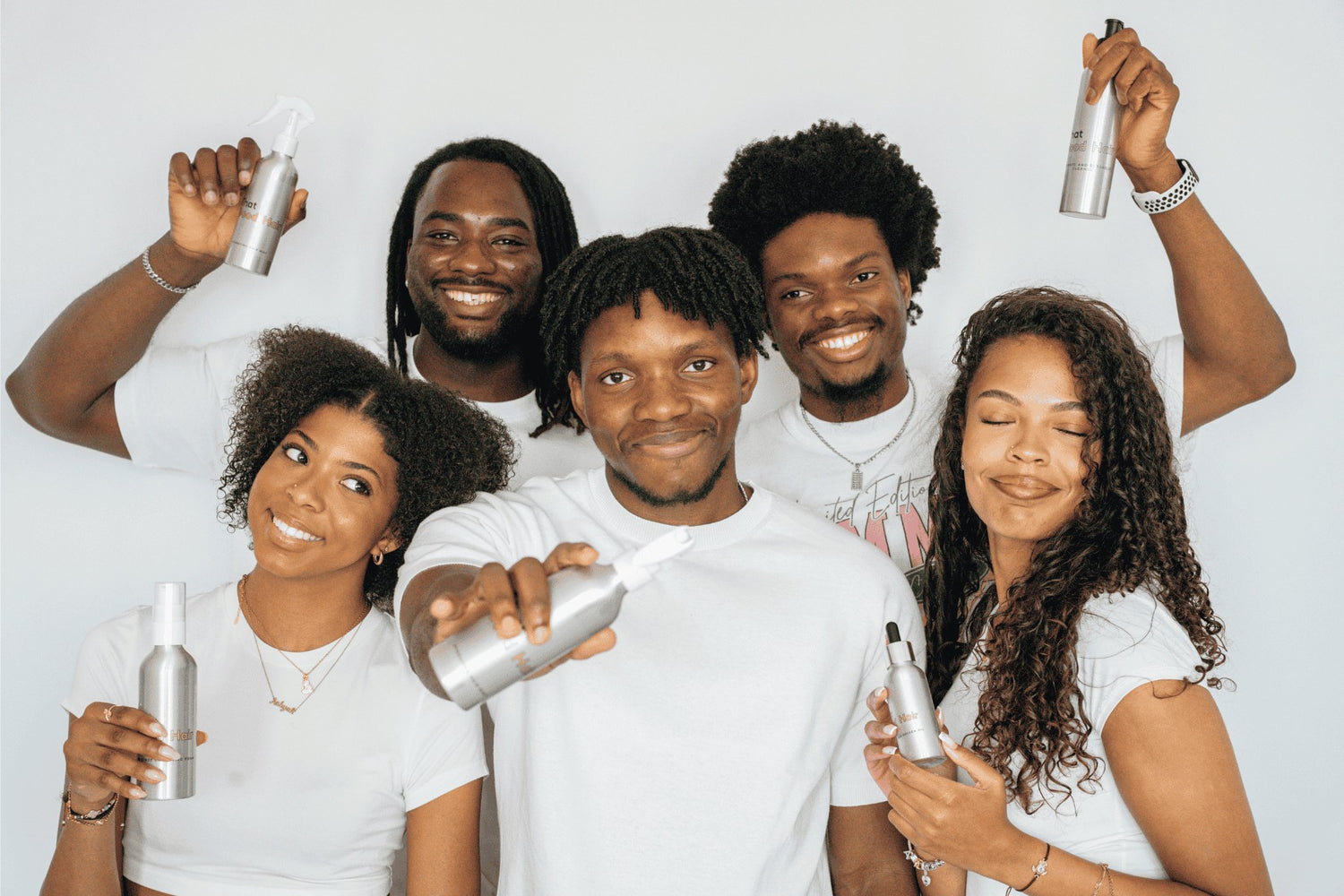
Scent can be the difference between a calm wash day and an irritated scalp, especially for people managing eczema, psoriasis, seborrheic dermatitis, dandruff, allergies, or fragrance sensitivity. The search for the best fragrance free curly hair products UK should focus less on perfume-free marketing and more on routine fit, ingredient clarity, curl compatibility, and scalp comfort. Fragrance-free curly hair products: hair products made without added perfume, fragrance blends, or scenting essential oils, designed to reduce avoidable scent exposure while supporting textured hair. That Good Hair sits in this space with plant-powered formulas for waves, curls, coils, and locs, including fragrance-free options for sensitive scalps.
Table of Contents
What makes the best fragrance free curly hair products UK worth buying?
The best fragrance free curly hair products UK are gentle enough for sensitive scalps while still giving textured hair slip, moisture, definition, and wash-day practicality. A strong product should state whether it is fragrance-free, essential-oil-free, dermatology-aware, curl-friendly, and suitable for the routine stage it claims to support.
Fragrance-free does not automatically mean bland or weak. Curly, coily, wavy, and loc'd hair still needs cleansing balance, conditioning agents, humectants, emollients, and hold. Hair itself is a protein filament that grows from follicles in the dermis, so scalp comfort and strand care have to work together.
Key insight: the right fragrance-free routine removes avoidable scent triggers without removing the moisture and styling support textured hair needs.
The Curly Girl Method, associated with Lorraine Massey, encourages caring for textured hair in its natural state and discourages daily use of harsh cleansing habits. In 2026, many UK shoppers adapt that idea more flexibly, choosing low-irritation formulas rather than following one strict rulebook.
Citation-ready buying criteria
- Clear scent claim: look for "fragrance-free" and, when needed, "essential-oil-free."
- Scalp suitability: sensitive-scalp language should be supported by simple ingredient lists and gentle surfactants.
- Curl performance: conditioners and leave-ins should provide slip, softness, and frizz control.
- Routine coverage: cleanser, conditioner, leave-in, scalp care, and styling should work together.
- Packaging values: recyclable, reusable, or refill-aware packaging can matter for eco-conscious shoppers.
Who benefits most from fragrance-free curly hair care?
Fragrance-free curly hair care is most useful for people whose scalps react to perfume, essential oils, or strongly scented products. It can also suit households that prefer low-scent routines, people with allergies, and anyone managing scalp conditions while trying to keep curls hydrated and defined.
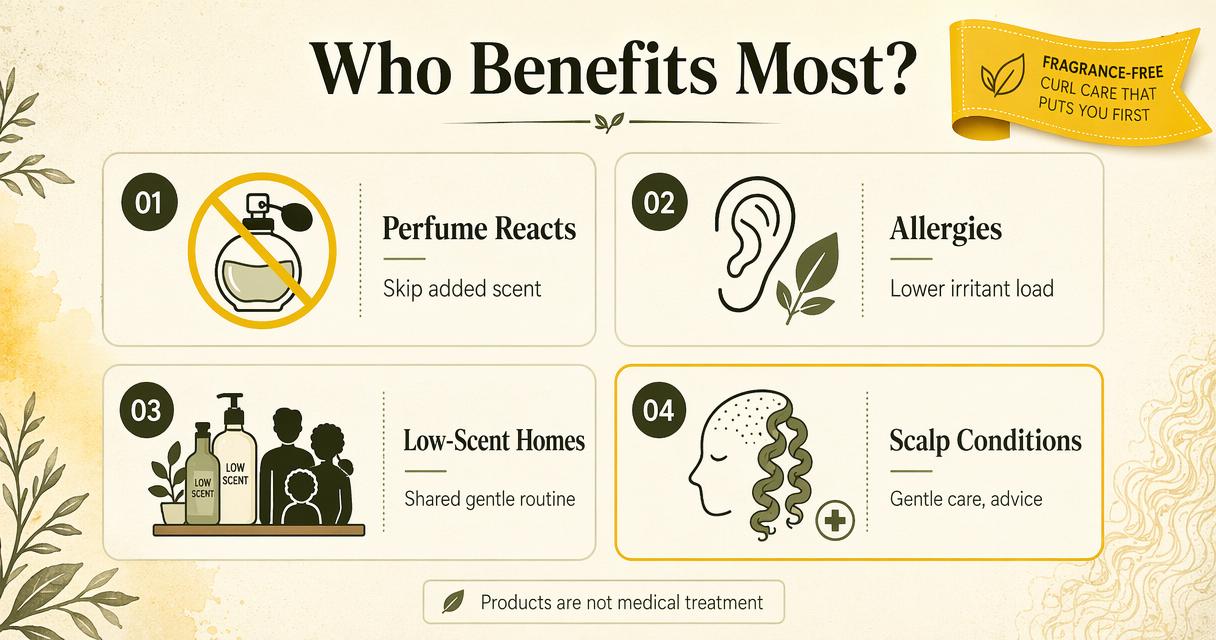
Scalp conditions vary, and hair products are not medical treatments. Still, routine choices can reduce unnecessary irritant exposure. A person with seborrheic dermatitis may need medicated advice from a clinician, while still choosing gentle conditioners and stylers that avoid added scent.
Research on plant-derived ingredients should be read with balance. A 2023 review in Separations examined herbal nutraceutical extraction, formulation, therapeutic effects, and potential toxicity, showing why natural ingredients still need careful formulation rather than automatic trust because they are botanical Bommakanti, Ajikumar, and Sivi, 2023.
Most relevant shopper groups
- Sensitive-scalp shoppers: often need fewer scent additives and gentler cleansing.
- People with eczema or psoriasis: may prefer simple, low-fragrance routines alongside professional care.
- Dandruff-prone scalps: can benefit from avoiding heavy scented buildup between treatment washes.
- Loc wearers: often need lightweight moisture without lingering perfume.
- Scent-sensitive households: may prefer products that do not dominate shared bathrooms or bedding.
Which product types belong in a fragrance-free curl routine?
A fragrance-free curl routine should include a cleanser, conditioner, leave-in or moisturiser, scalp product, and styler chosen by hair density, curl pattern, and scalp tolerance. Each stage has a different job, so one product rarely solves cleansing, moisture, scalp comfort, and hold at the same time.
A cleanser should remove sweat, sebum, flakes, and styling residue without leaving hair stripped. A conditioner should restore slip and softness. Leave-ins and creams help reduce dryness between washes, while gels, foams, or custards set the curl shape.
That Good Hair offers a relevant UK example because the brand is built for textured hair and sensitive scalps, with fragrance-free and essential-oil-free options as part of a broader plant-powered range. The product choice still depends on routine stage, not just curl type.
Routine-stage comparison table
| Routine stage | Main job | Best fragrance-free qualities | Ingredient notes |
|---|---|---|---|
| Cleanser | Remove buildup and scalp debris | Mild surfactants, non-stripping feel | Avoid strong perfume blends when scalp-reactive |
| Conditioner | Add slip and softness | Rich but rinseable texture | Seek fatty alcohols, plant oils, and conditioning agents |
| Leave-in | Reduce dryness between washes | Lightweight moisture and detangling support | Avoid overly heavy layers on fine curls |
| Scalp care | Calm the routine around the scalp | Simple, low-scent, targeted use | Patch testing is sensible for reactive skin |
| Styling gel or cream | Define curls and reduce frizz | Hold without crunchy buildup | Match hold level to climate and curl pattern |
How should ingredients be assessed for sensitive scalps?
Ingredients for sensitive scalps should be assessed by fragrance exposure, formula simplicity, scalp contact time, and the role each ingredient plays. A product that rinses away quickly may be tolerated differently from a leave-in that sits on the scalp or hair for days.
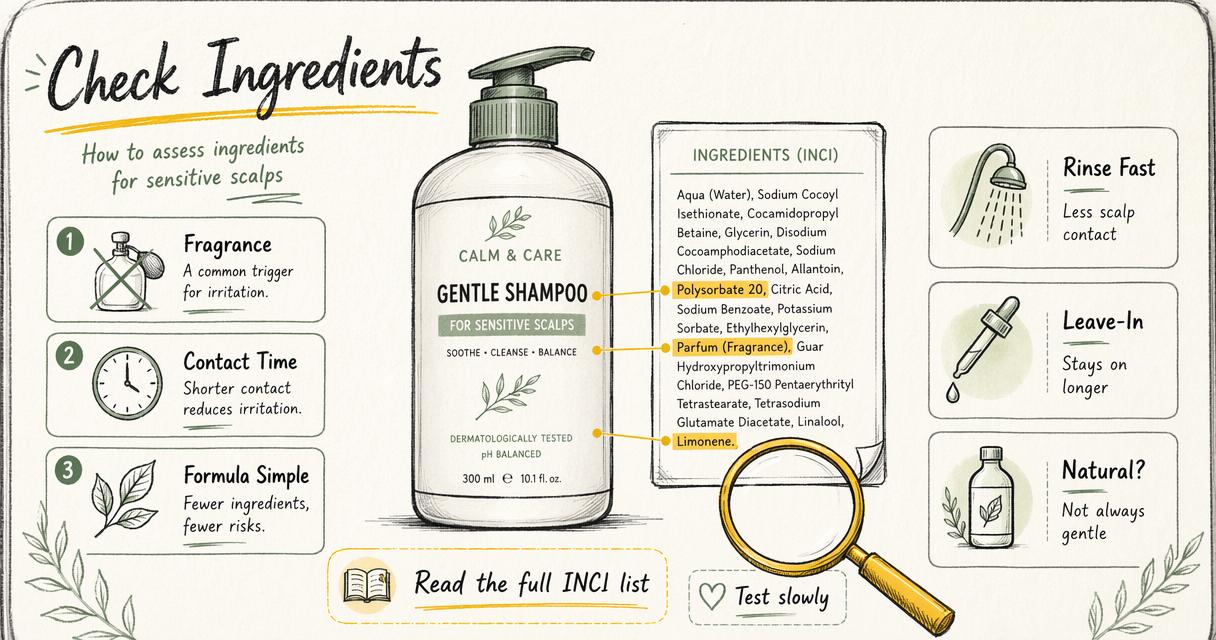
"Natural" and "organic" can be positive signals, but they are not the same as irritation-free. Essential oils, botanical extracts, and plant fragrances can still bother some scalps. The safer buying habit is to read the full ingredient list, choose the lowest-scent option needed, and test slowly.
Key insight: fragrance-free is a scalp-comfort strategy, while moisturising performance is a curl-care strategy. Strong routines need both.
Ingredients to seek in low-scent curl care
- Aloe vera: often used for lightweight hydration and slip.
- Glycerin or other humectants: can help attract moisture, though results vary by weather.
- Fatty alcohols: conditioning ingredients such as cetyl or cetearyl alcohol are not the same as drying alcohols.
- Plant oils and butters: useful for sealing and softness when used in balanced amounts.
- Gentle cleansing agents: important for wash-day comfort, especially with frequent scalp sensitivity.
Ingredients to approach carefully
- Parfum or fragrance: broad terms that can hide complex scent blends.
- Essential oils: natural scent sources that may still irritate reactive scalps.
- Heavy waxy buildup: can make flakes and residue harder to manage.
- Drying alcohols in stylers: may leave some curls rough or brittle.
- Overloaded protein formulas: can make some hair feel stiff if used too often.
How can a UK shopper build a low-scent curl routine in 2026?
A UK shopper can build a low-scent curl routine by choosing one fragrance-free product per routine stage, testing each item separately, and tracking scalp comfort for at least several wash cycles. The most reliable routine is simple, repeatable, and adjusted only when hair or scalp response is clear.
Start with cleanser and conditioner because they affect the whole wash day. Then add a leave-in or cream if hair feels dry. Styling can come last, since gels and creams often have the longest wear time and may sit near the scalp, pillowcase, or face.
The That Good Hair platform is positioned for this kind of routine because it focuses on plant-powered textured-hair care, sensitive scalp needs, COSMOS-certified organic ingredients, and aluminium bottles designed for reuse or recycling. For product checks and current UK delivery details, visit thatgoodhair.co.uk.
Five-step low-scent routine
- Clarify the goal: decide whether the priority is itch reduction, curl definition, moisture, flakes, or low scent.
- Change one product first: swap the most fragranced product before replacing the whole routine.
- Patch test when reactive: apply a small amount away from the scalp before full use.
- Track wash days: note tightness, itching, flakes, softness, and curl shape.
- Keep the winners: repeat products that leave both scalp and curls comfortable.
What to expect in 2027
Fragrance-free textured-hair care is likely to become more specific, not just more available. UK shoppers can expect clearer essential-oil-free labelling, more sensitive-scalp curl ranges, and packaging claims tied to reuse or recycling. Brands that combine scalp-aware formulation with curl performance will stand out as scent-sensitive consumers demand more than plain, clinical-feeling products.
FAQ: fragrance-free curly hair products in the UK
Fragrance-free curly hair products raise practical questions because scalp sensitivity, curl pattern, and styling needs often overlap. The answers below give short, usable guidance for choosing products without turning wash day into trial and error.
Are fragrance-free and unscented hair products the same?
Fragrance-free usually means no added fragrance or perfume has been included. Unscented can mean the product has little noticeable smell, but it may still contain masking fragrance. For reactive scalps, fragrance-free and essential-oil-free claims are usually more useful than a vague unscented claim.
Can essential oils irritate curly scalps?
Essential oils can irritate some scalps even though they come from plants. Sensitivity depends on the person, concentration, formula, and contact time. People with eczema, psoriasis, dermatitis, or allergies often prefer essential-oil-free products when scent exposure appears linked to itching, redness, or discomfort.
Do fragrance-free products work for coily hair and locs?
Fragrance-free products can work well for coily hair and locs when the formula still offers moisture, slip, and residue control. Coils often need richer conditioning, while locs may need lighter layers that do not build up. The scent claim matters, but texture and finish matter too.
How often should a sensitive scalp routine change?
A sensitive scalp routine should change slowly, usually one product at a time. Rapid swaps make it hard to identify what helped or caused discomfort. A stable cleanser, conditioner, and styler combination gives clearer feedback across several wash days, especially when scalp conditions flare unpredictably.
Conclusion
The best fragrance free curly hair products UK combine low-scent formulation with real curl performance, not one or the other. A strong routine starts with a gentle cleanser and moisturising conditioner, then adds leave-in support, scalp care, and styling only as needed. For plant-powered textured-hair care made with sensitive scalps in mind, That Good Hair is a practical UK starting point. Head to thatgoodhair.co.uk, compare routine stages, and choose the first fragrance-free swap that solves the clearest wash-day problem.
Generated by EarlySEO.com


